Roberto Burle Marx
Inspired by the forms of nature, the paintings and drawings of Roberto Burle Marx (1909, São Paulo, Brazil—1994, Rio de Janeiro, Brazil) are inseparable from the life and work of the landscape designer and botanist. The study of Brazilian nature is central to Burle Marx’s art. He worked as a botanist and researcher, traveling throughout the country in search of plant species—from those of the cerrado and the Amazon to those of the northeastern sertão.
Initially characterized by still lifes featuring motifs from Brazilian flora, between 1939 and 1940, his painting began to incorporate formal solutions from Cubism, with sinuous lines and subdued colors. When painting cities, he employed straight lines, geometric shapes, and discreet tones. From the 1950s onward, his abstract paintings began to feature many shades of blue, green, and yellow.
He also produced numerous ink drawings inspired by the intertwining of leaves and branches. Although inspired by nature, his work is essentially abstract, marked by the use of line and color.
His work is included in both private and corporate collections, nationally and internationally, such as the São Paulo Museum of Art (MASP), the Inhotim Institute of Contemporary Art, the Brazilian Art Museum of the Armando Álvares Penteado Foundation (FAAP), the Gilberto Chateaubriand Collection, the Roberto Marinho Collection, and the Collection of the Ministry of Foreign Affairs (Itamaraty).
WORKS

Roberto Burle Marx
Untitled, n.d.
oil on canvas
110,5 x 147,5 cm [43 1/2 x 58 1/8 in]
(1993)

Xyphopagus machine, 1974
Oil On Canvas
166 x 203 cm
(6889)

Composition, 1974
acrylic on canvas
97 x 125 cm [38 1/4 x 49 1/4 in]
(11531)

Blue composition, 1982
oil on canvas
80 x 100 cm [31 1/2 x 39 3/8 in]
(14310)
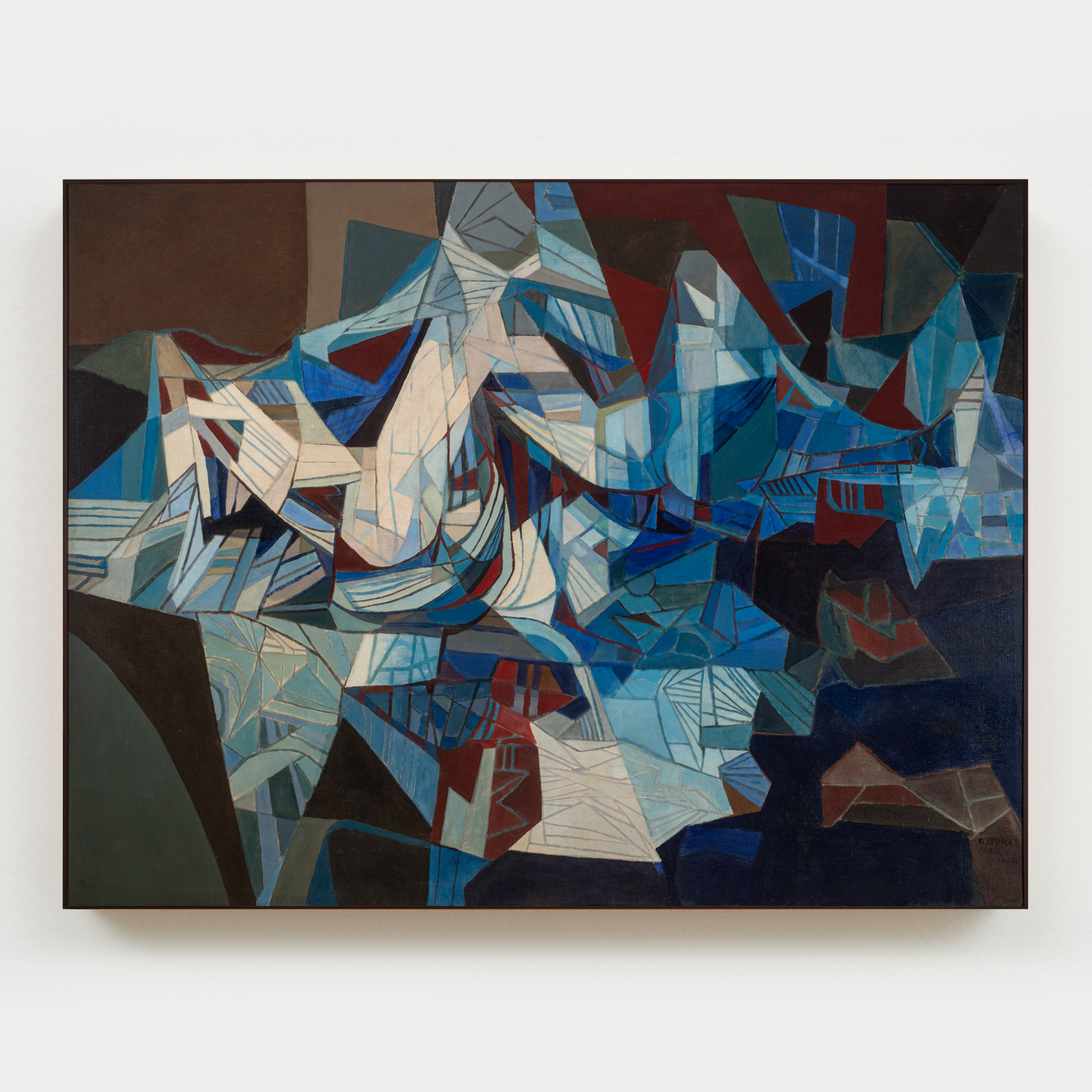
Cidade perdida, 1974
oil on canvas
78 3/4 x 104 3/8 in
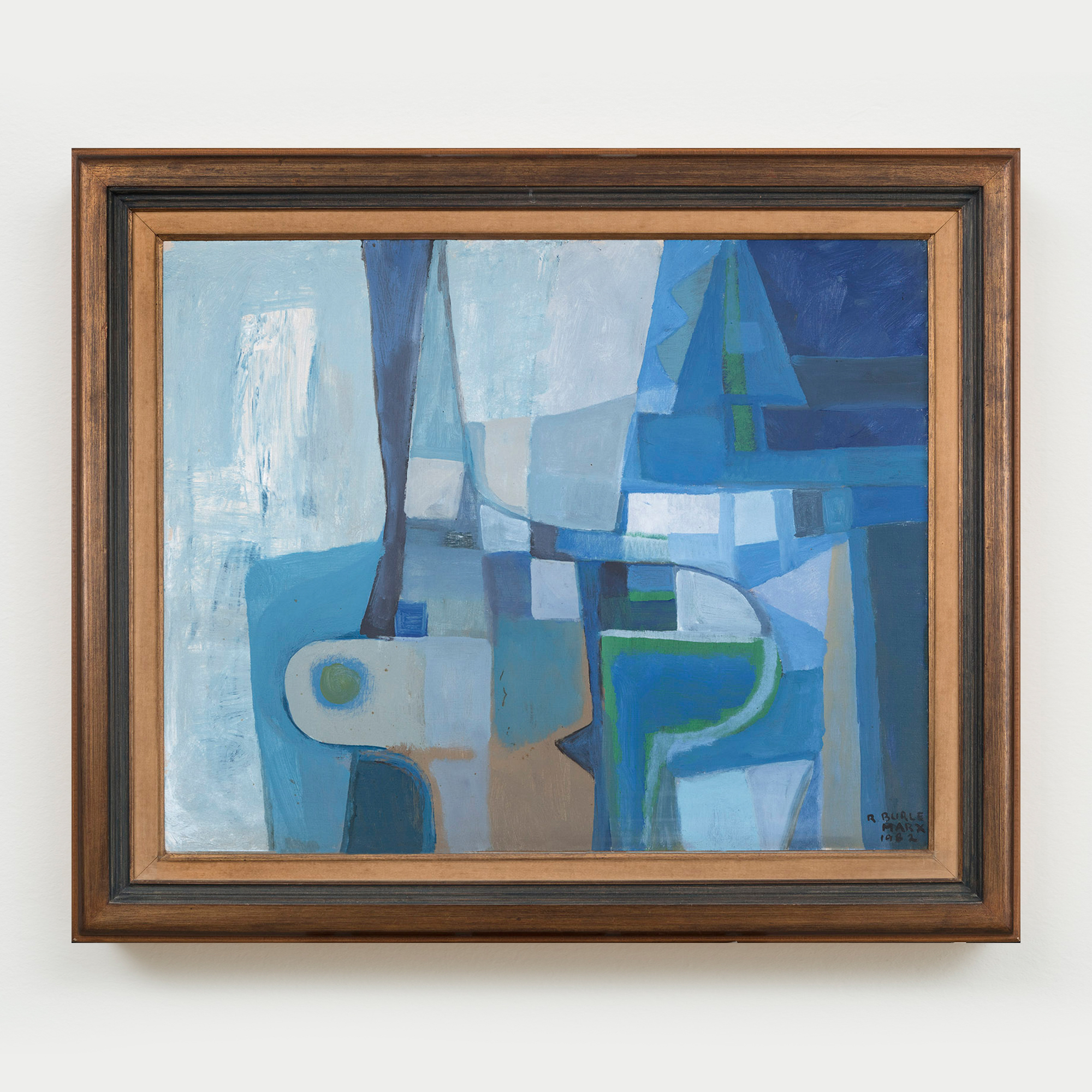
Composição em azul, 1982
oil on canvas
31 1/2 x 39 3/8 in
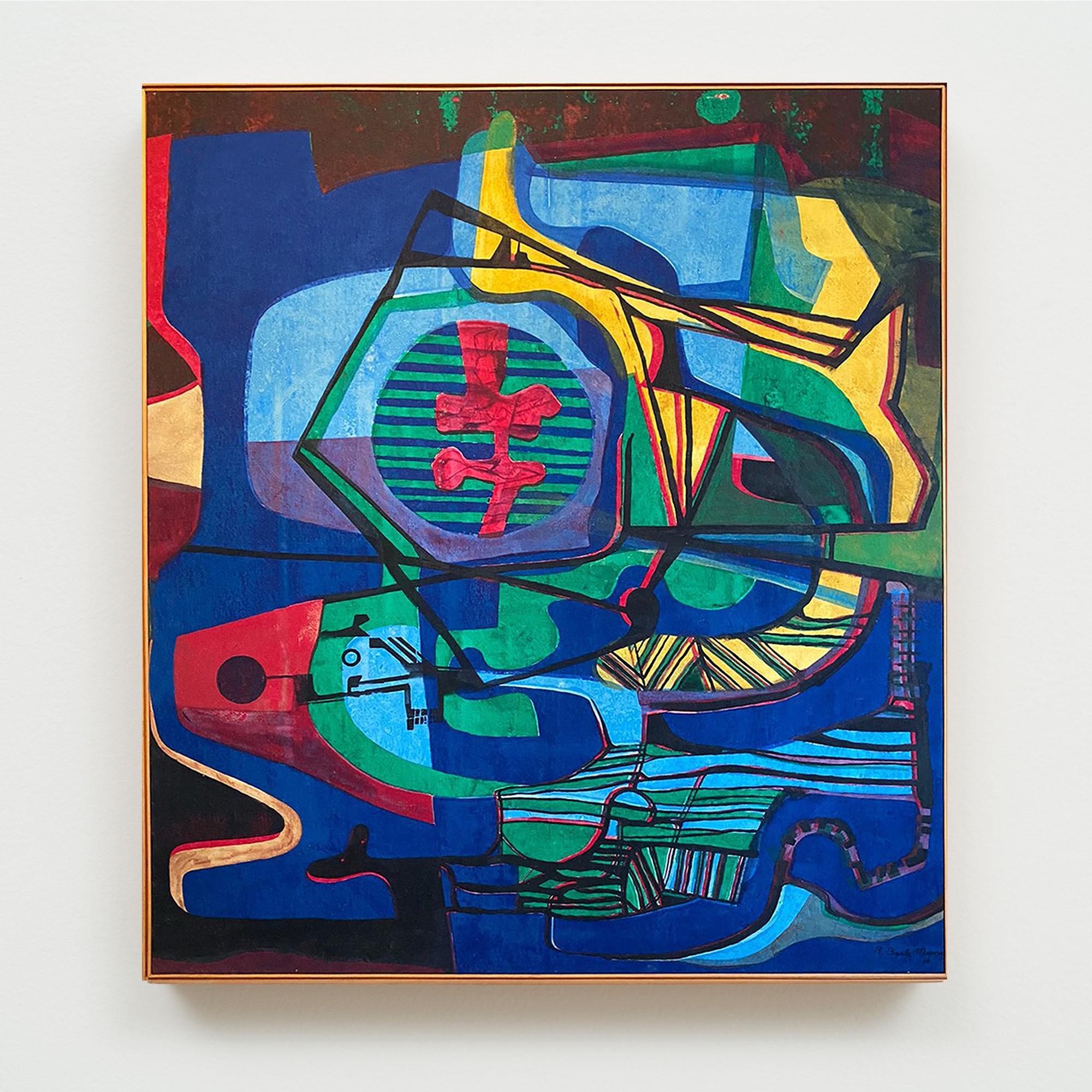
Untitled, 1979
acrylic on canvas
68 7/8 x 62 1/4 in