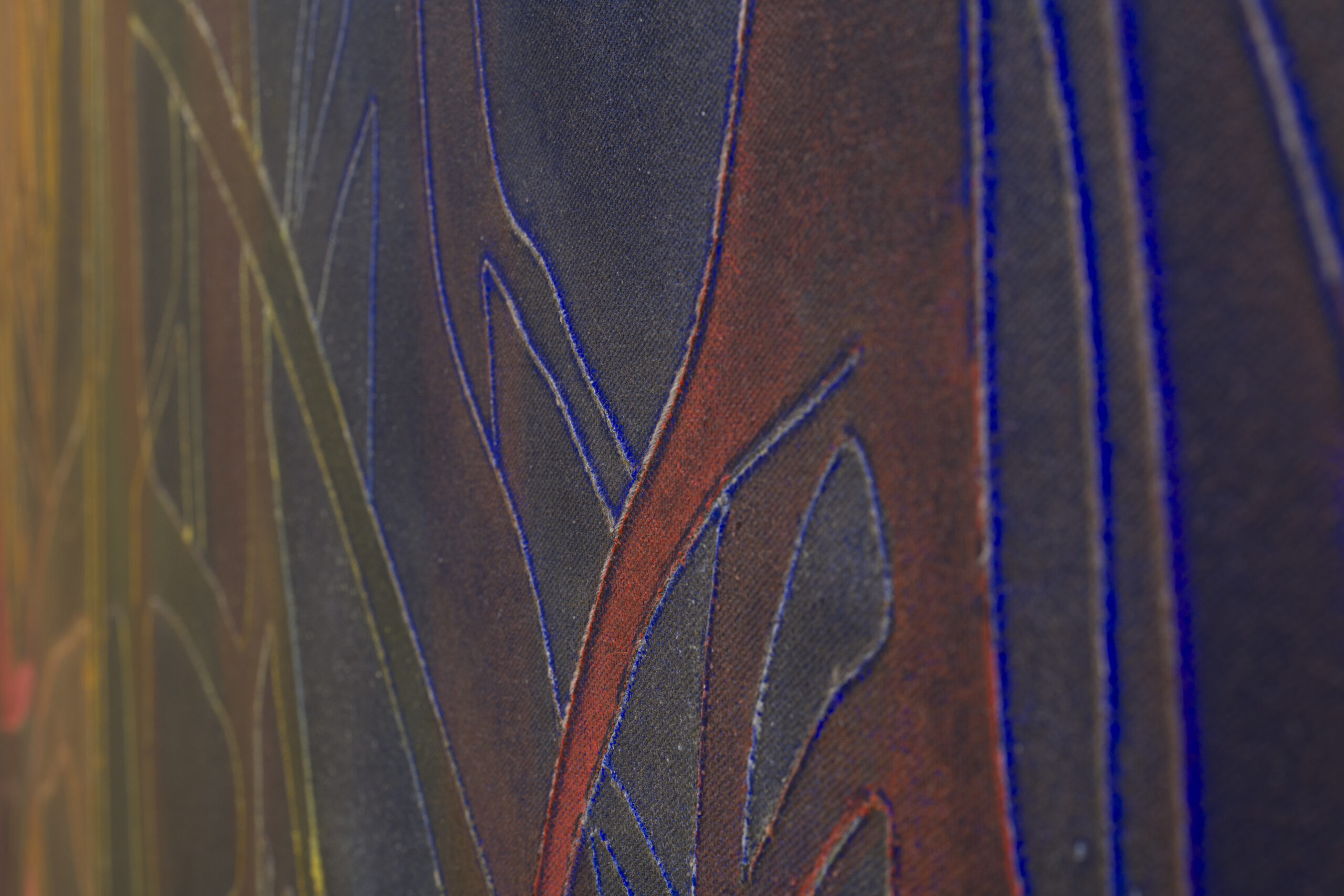
To Inhabit Color
Flexa is pleased to announce its tenth exhibition, To Inhabit in Color part of the gallery’s 2026 program. Opening on April 18, the show is curated by Luisa Duarte and Daniela Avellar, and is accompanied by a critical text by Renato Menezes, curator at the Pinacoteca de São Paulo. The group exhibition proposes to consider color in art beyond its strictly formal dimension.
Starting from the understanding that chromatic phenomena are shaped by experience, subjectivity, and everyday life, the group exhibition approaches every color palette as an active field, capable of producing different affects and perceptions. In the works brought together here, color emerges as a structuring force—both of the artworks and of the experience proposed to the public. The exhibition design, inspired by the work of Mexican architect Luis Barragán, is by Julio Shalders.
Going back in time, it is striking to learn that ancient Greek statues were originally polychromatic. Analyses using ultraviolet light, carried out in the 1980s, revealed traces of pigments on marbles now seen as white. Weathering erased these colors, which once appeared in details such as skin, faces, and ornaments.
By challenging the Western tradition that has historically relegated color to a place of excess—or even superficiality—To Inhabit Color proposes a shift. Moving from ornament to occupy the realm of thought, color is capable of both filling the exhibition space and manifesting itself across the various works on view, prompting viewers to reflect on the symbolic meanings embedded in chromatic experience. The exhibition’s title is inspired by the essay of the same name published by Lygia Pape in 1988, in which the artist reflects on the relationship between color and vernacular housing in Rio de Janeiro.
Bringing together artists from different generations, the exhibition is organized into three sections that explore distinct approaches to color. In one, chromatic investigation unfolds through empirical observation and subtle tonal variation, approaching an almost tactile experience. In another, color emerges from everyday signs and popular architectures, incorporating visual references from urban and vernacular contexts. The third axis questions a certain reticence toward color. In this group, saturated and vivid hues assert themselves, reminding us of chromatic complexity and its capacity to generate energetic connections.
The exhibition thus proposes an expanded approach to color, understood as a living experience situated between the gaze, the body, and the world.
The show includes works by Abraham Palatnik, Adriana Varejão, Alfredo Volpi, Aluísio Carvão, Amadeo Luciano Lorenzato, Amelia Toledo, Ana Claudia Almeida, André Ricardo, Antonio Ballester Moreno, Antonio Bandeira, AVAF, Beatriz Milhazes, Carlos Vergara, Cícero Dias, Dudi Maia Rosa, Frank Stella, Ione Saldanha, Jorge Guinle, Judith Lauand, Lucia Koch, Luiz Braga, Luiz Zerbini, Lygia Pape, Marcone Moreira, Maria Leontina, Mariana Palma, Miguel Rio Branco, Milton Dacosta, Montez Magno, Paulo Pasta, Rafael Kamada, Rodrigo Cass, Rubem Valentim, Sol LeWitt, Tomie Ohtake, among others.