Marlene Almeida: veins of the soil
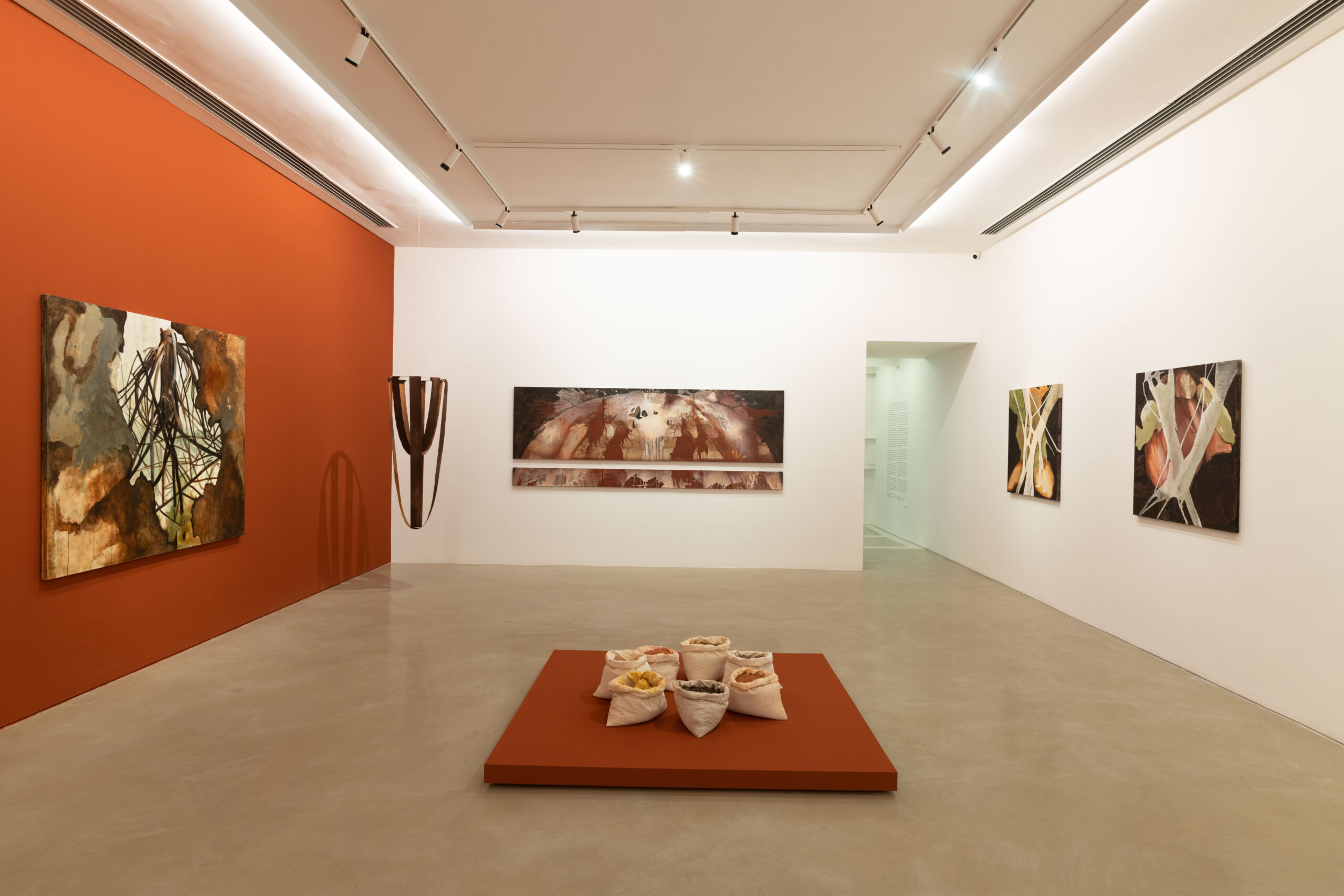
Beyond the so-called climate crisis, what we are witnessing nowadays can be seen as a profound mutation: erosion, extinctions, and melting glaciers herald a world in transition. Bruno Latour (1947-2022), a French anthropologist, has called the Earth Gaia, a mythical force that's at once scientific and political, bursting into world history and demanding some revisions from us. Amid this context, it is important to highlight that the work of Marlene Almeida (1942), an artist from Paraíba, involves a necessary reconnection with the land. Her engagement as an activist is also notable: she is a founding member of the first environmental organization established in Paraíba, APAN — the Paraíba Association of Friends of Nature [Associação Paraibana dos Amigos da Natureza] — which remains active to this day, and she is also part of the Artists for Nature Movement [Movimento de Artistas pela Natureza]. This exhibition features the artist's recent work, created between 2019 and 2024.
Since the 1970s, the artist has been investigating Brazilian soil as a living organism, exploring matter, time, and territory through expedition-based practices in which she identifies and studies soils and their formations. From these explorations, she gathers sediment samples from different regions, using their shades, textures, and scents as creative resources. In this way, Almeida constructs an inventory of fragments in which each part is a temporal and territorial inscription, like particles capable of holding the remains.
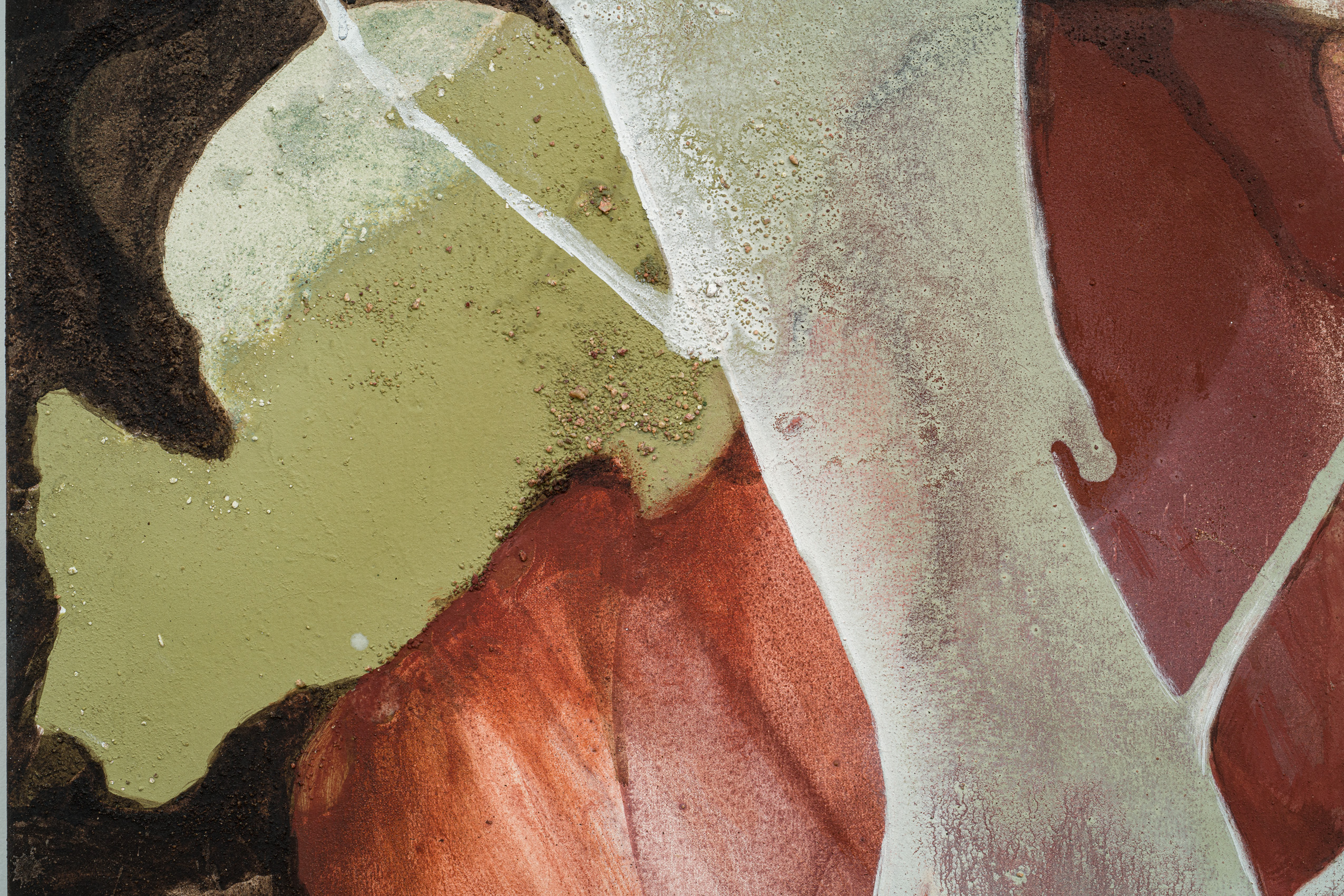
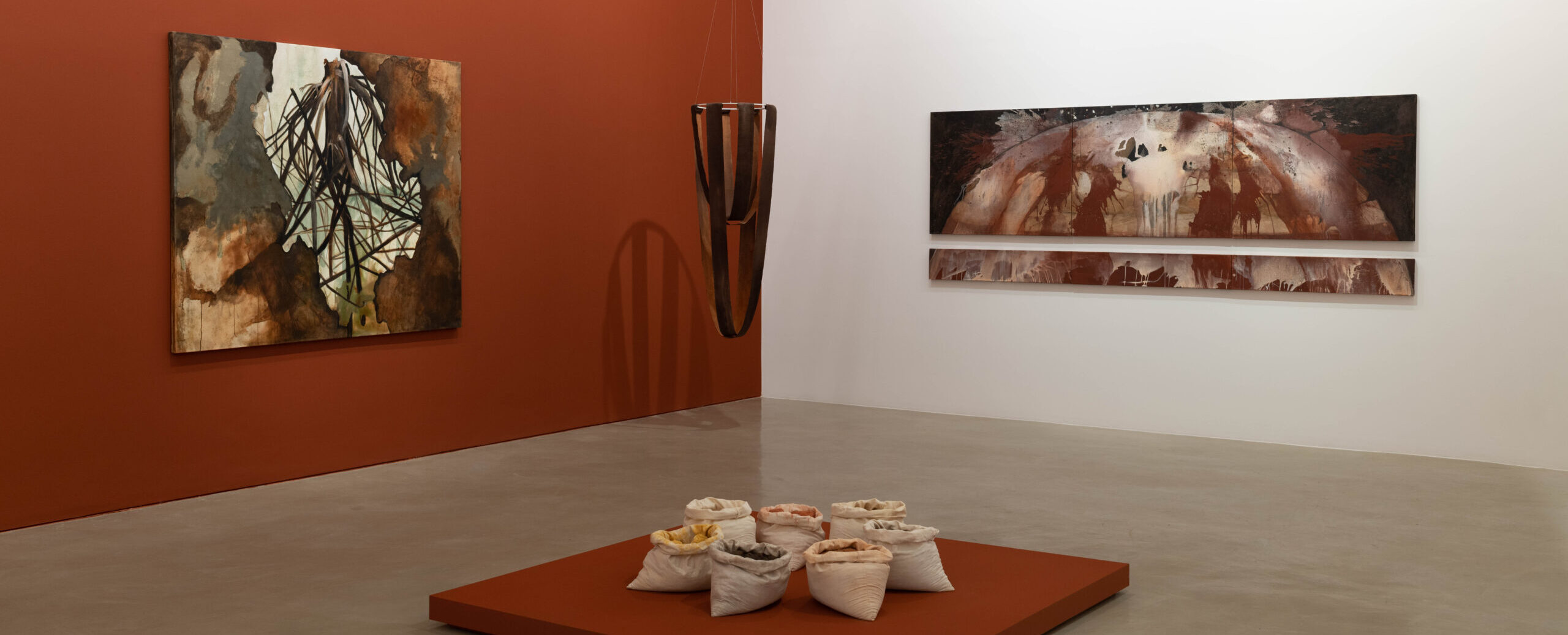
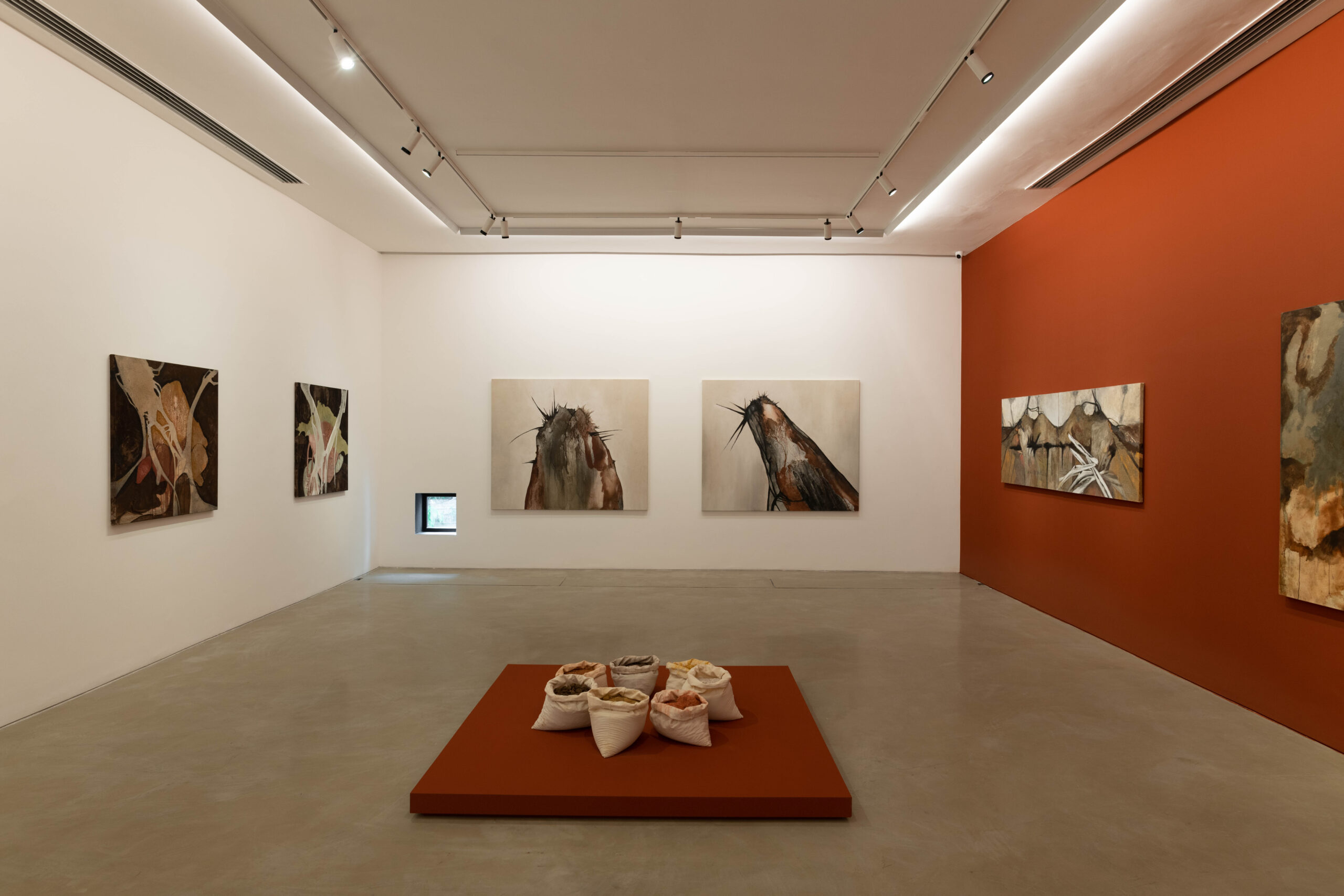
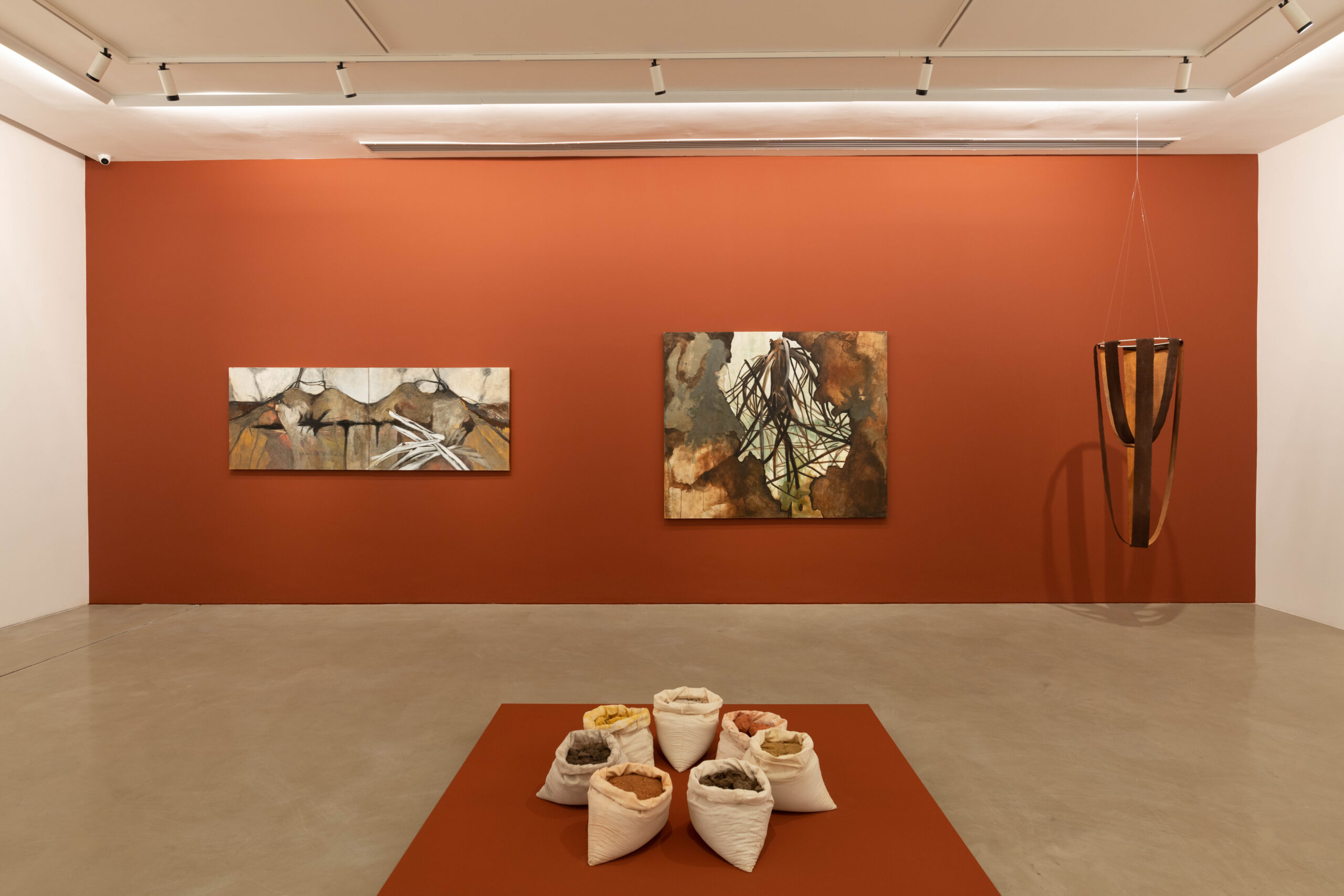
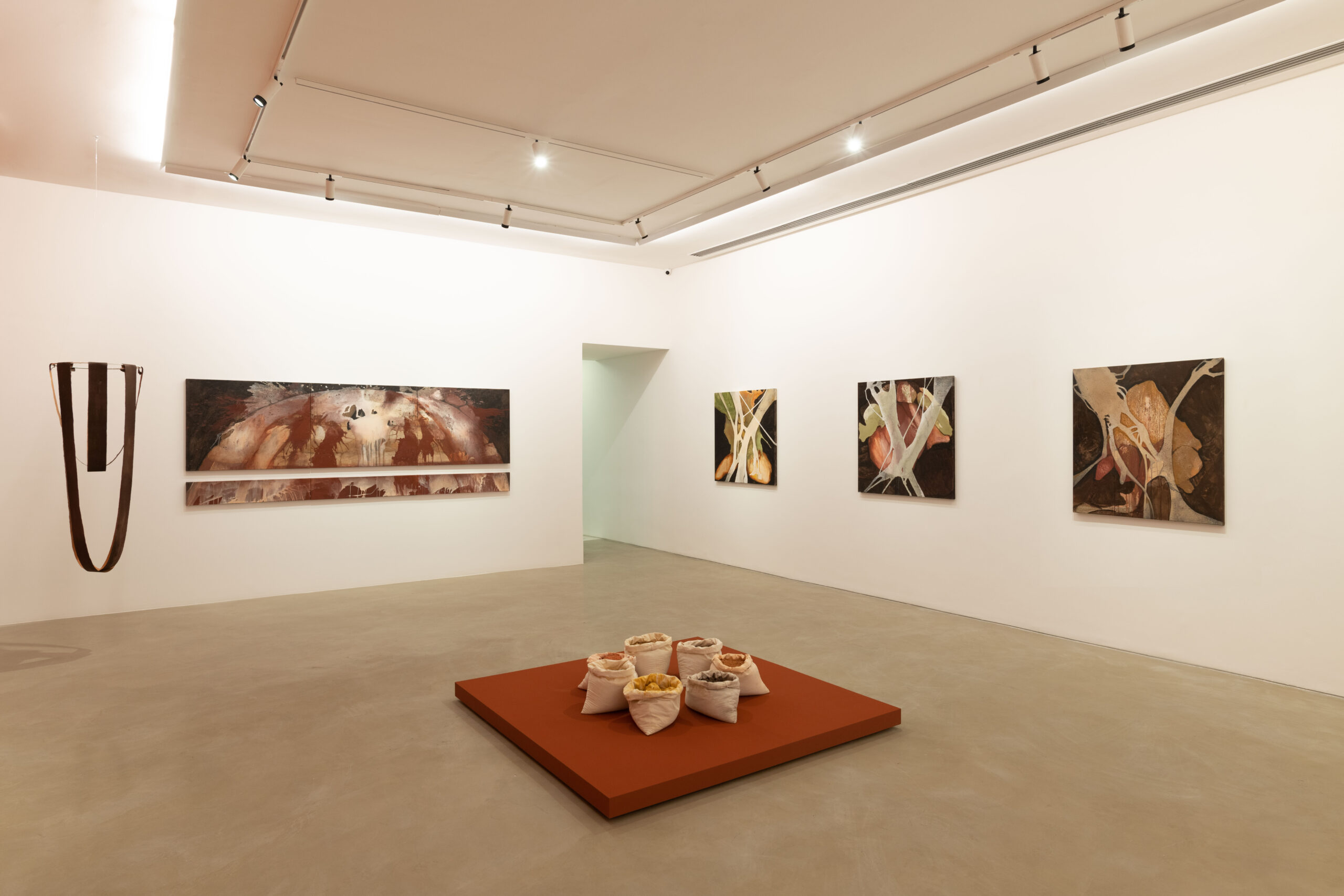
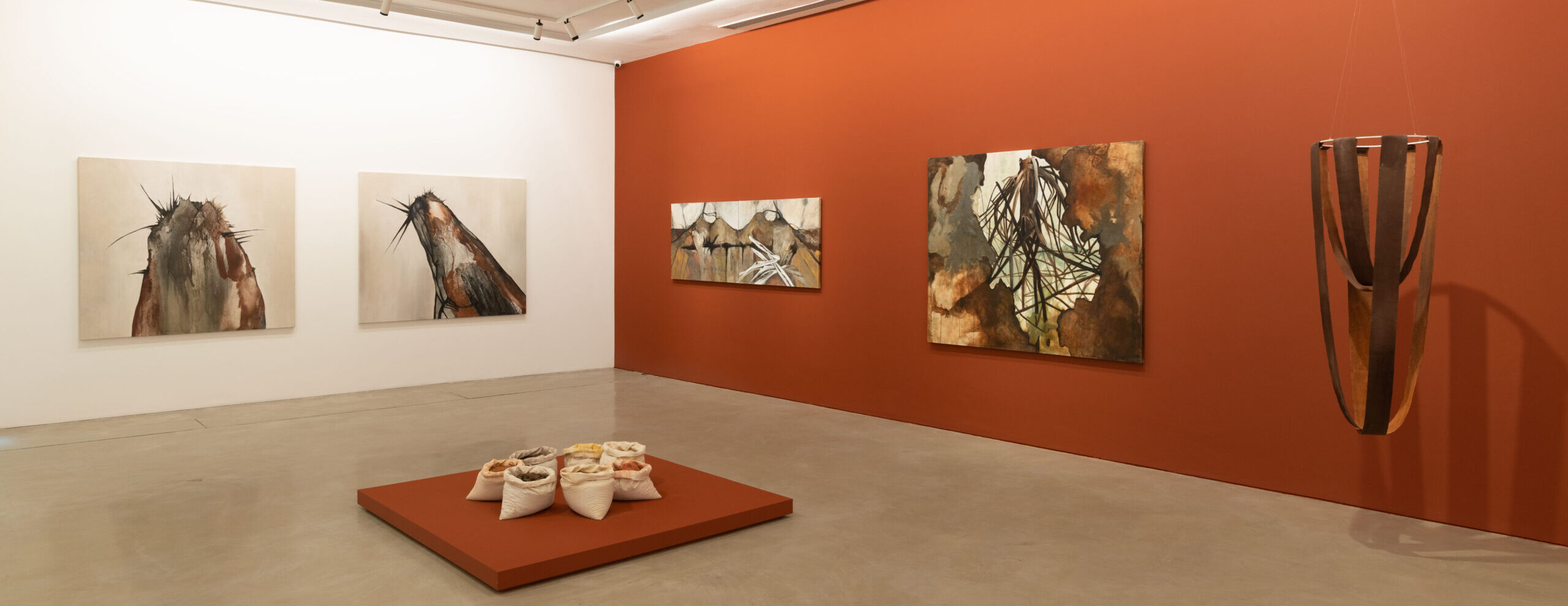
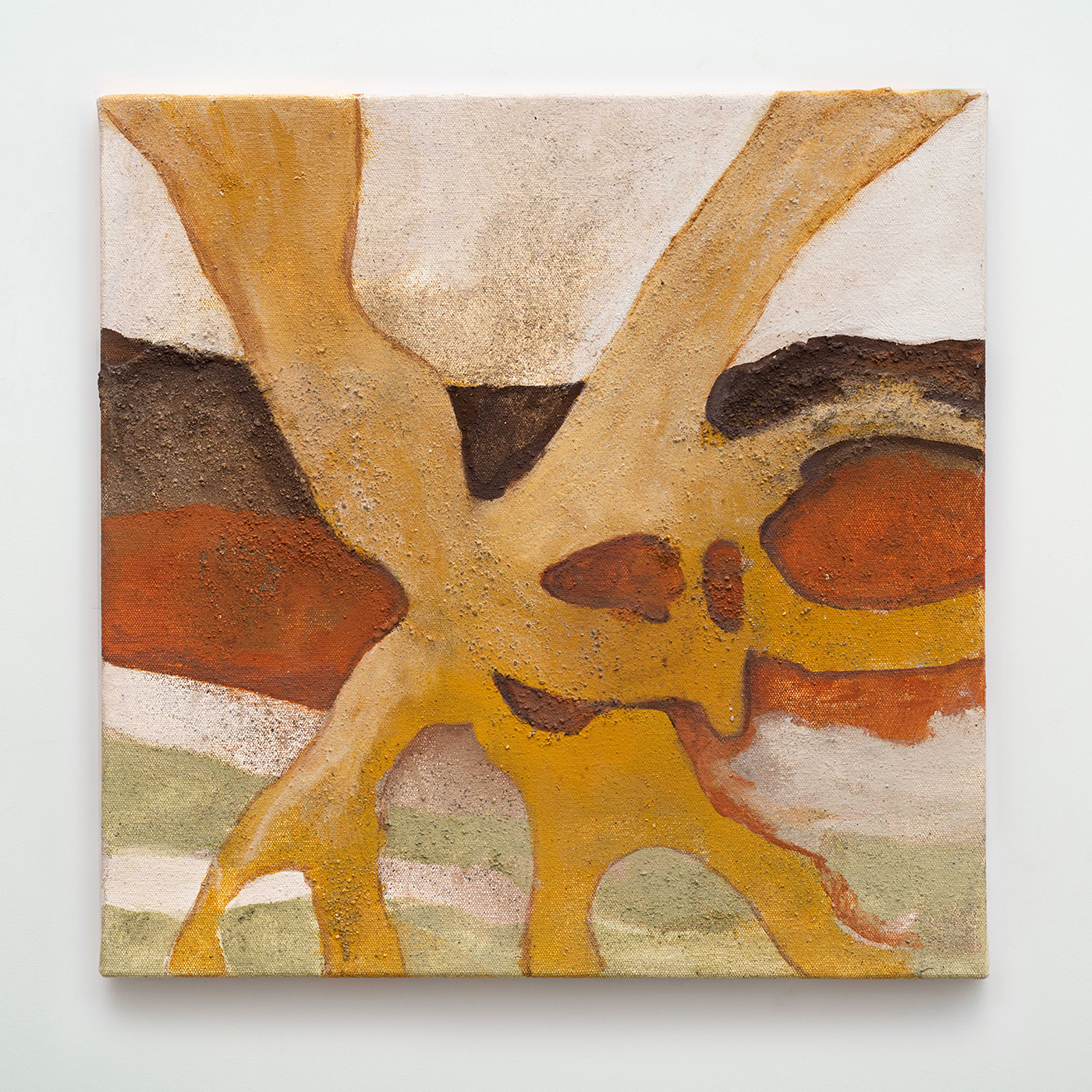
Almeida’s studio functions simultaneously as a laboratory and a non-institutional museum. Organic elements are transformed into pigment, generating an unusual palette based on the regions visited, in an implicated gesture. Earthy tones, rust, terracotta, and gray condense ideas of transmutation: “Color is not concerned with time", says the artist. These colors are gathered in small containers, forming what the artist calls the Museum of Brazilian Soils. In the work Terra livre (2019), Almeida brings together samples from diverse geographic origins — sertão, cariri, brejo, and the coast of Paraíba. In Veredas V (2022) and Cordilheira (2022), vegetal and topological details appear in the titles themselves, revealing the relationships established during the expeditions.
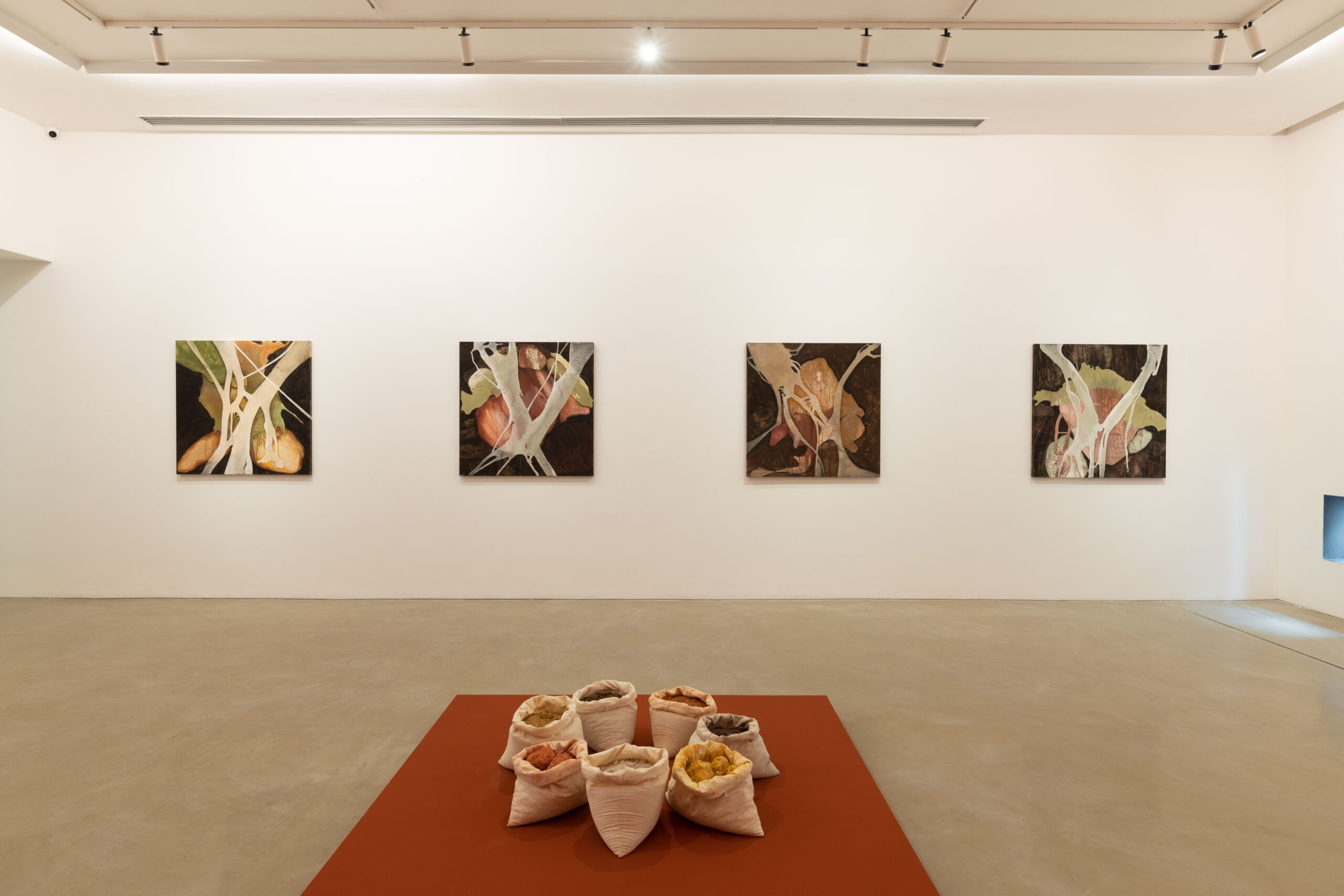
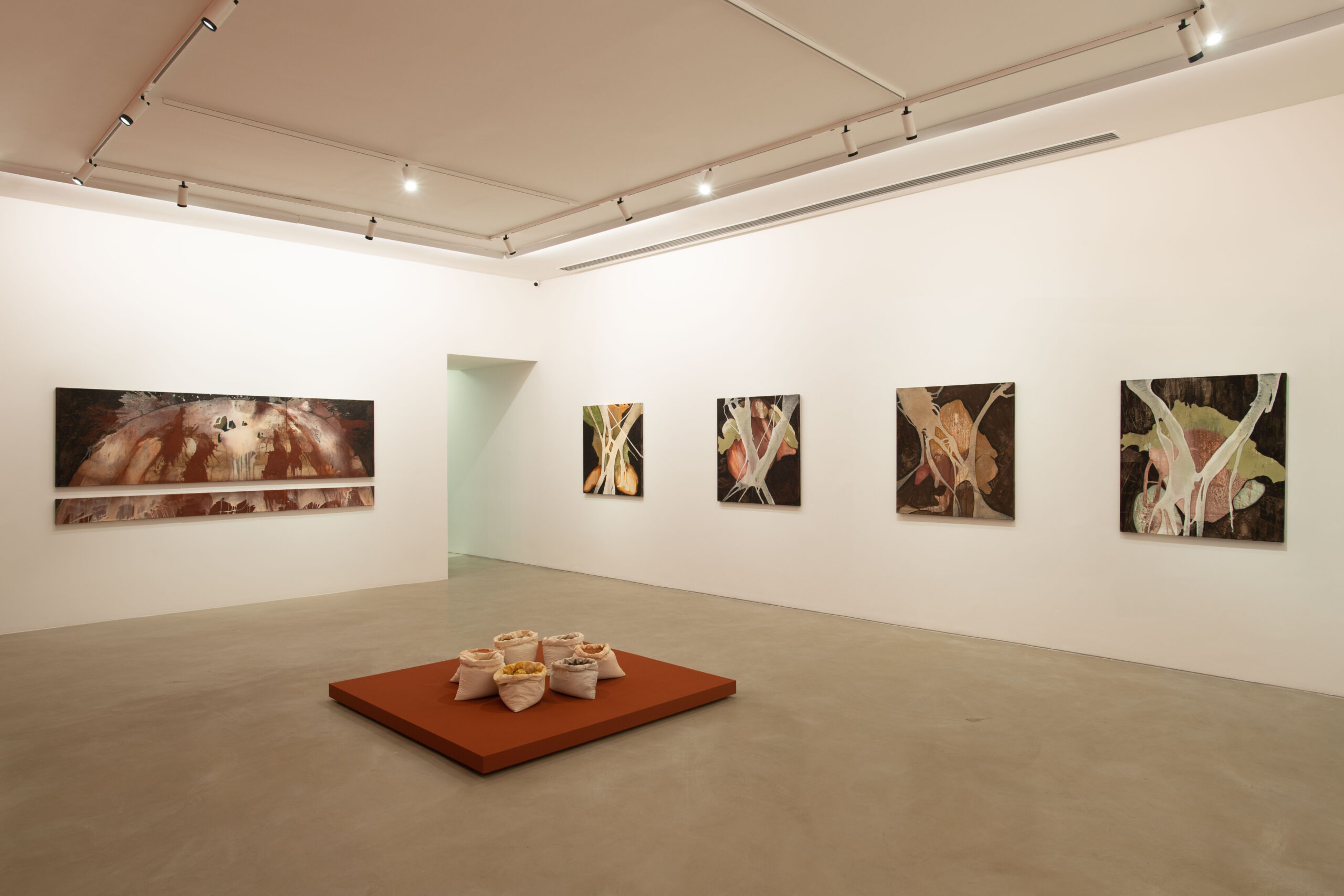
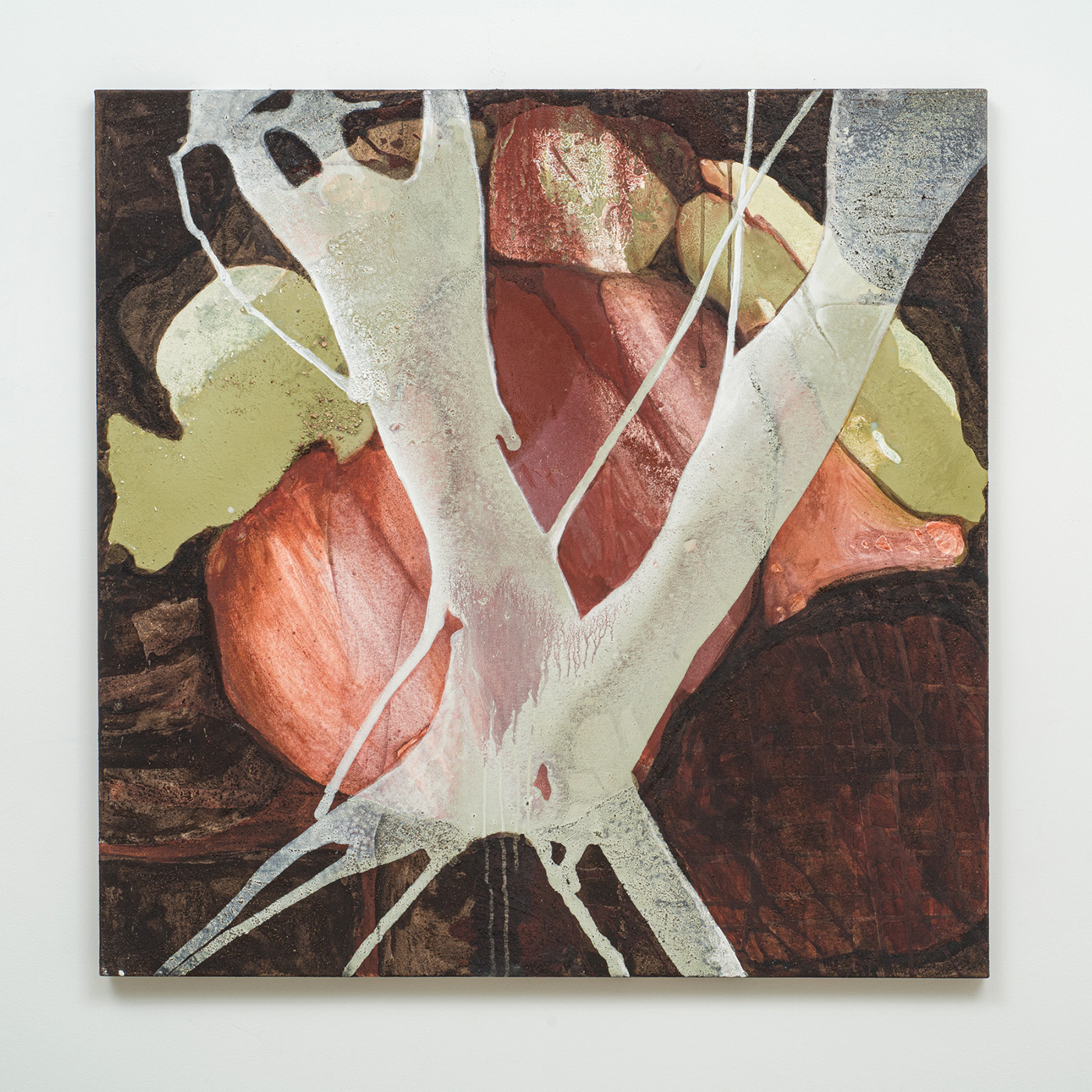
The use of resources brought directly from nature is practiced without falling into stagnant categories, such as the very idea of nature as something fixed and inert, which allows for the possibility of polyphonic coexistence of different ways of being. Veios da terra (2024) are paintings that feature branched organic forms, resembling rhizomes, evoking both the image of flows under the ground and the idea of intertwined connections between the human and non-human worlds. Meanwhile, in Terra da Saudade (2024), we see a crack revealing the roots of a tree growing in different directions.
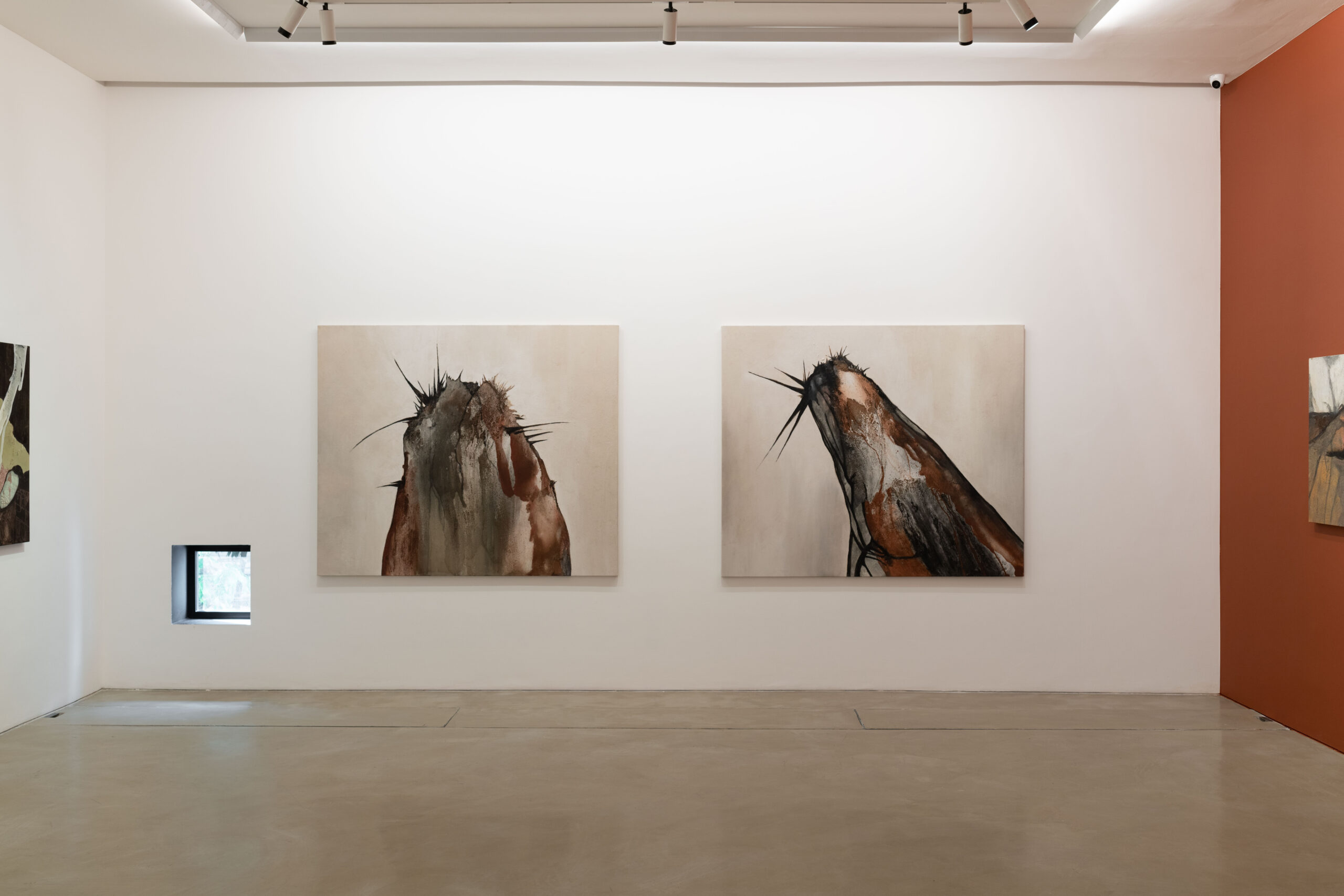
The dense color fields and their textures, the overlapping layers of stains and roughness, suggest flows to the eye, as if the material were constantly rearranging itself through passages and new formations. The perception of the artist's works is, in this way, something that guides us to listen from within the materials, evoking the transformative dynamics of the land. In Aguda como Serra II and Aguda como Serra III (2024), gray and reddish tones appear to densify the figures of mountains and cliffs. The watery spots form a unique texture, reminiscent of the expressiveness of the land, something that constantly permeates Almeida’s pictorial practice.
Marlene Almeida practices a profound listening in direct contact with the environment. Instead of domination and extraction, the idea of cooperation comes into focus. In a meticulous and ritualistic process, she adopts an alchemical stance, as if responding to Gaia’s call mentioned earlier. Isabelle Stengers (1949), Belgian philosopher and historian, proposes that we reactivate the use of the term “magic”, detaching ourselves from its metaphorical use and thinking of it as a dimension capable of bringing us into relation with all existing things. There is an ethical gesture in the artist's work, which is both magical and political, when she establishes a method of enchantment through contact between the individual and non-human elements. Her practice is woven together with the breathing soil.
The thinking of Antônio Bispo dos Santos (1959-2023), also known as Nêgo Bispo, Brazilian philosopher, writer, and quilombola leader, helps us understand this relationship of involvement. Bispo characterizes the land as an original yearning and explains that traditional knowledge understands it as a relational organism, formed by all the beings that share it.
In contrast, modern agricultural practices, with their linear and monoculture planting, have disturbed the harmony that the triangular planting pattern preserved. Erosion and imbalance, therefore, are not only environmental, but also epistemological — the result of a detachment between the body and the earth.
Marlene Almeida's work thus inhabits an area of thinking and practice capable of responding to contemporary urgencies. By working with soil, she is simultaneously mobilizing science, spirituality, art, and politics, generating ways of reimagining the idea of nature. Here, the Earth is no longer a background but becomes the protagonist, a thinking force that calls us to reimagine the possibilities of our relationship with the world.
WORKS
Marlene Almeida
Veredas V, 2022
têmpera de pigmentos minerais sobre tela
40 x 40 cm
Marlene Almeida
Veios da terra IV, 2024
pigmentos minerais naturais e aglutinantes sobre tela
39 3/8 x 39 3/8 in
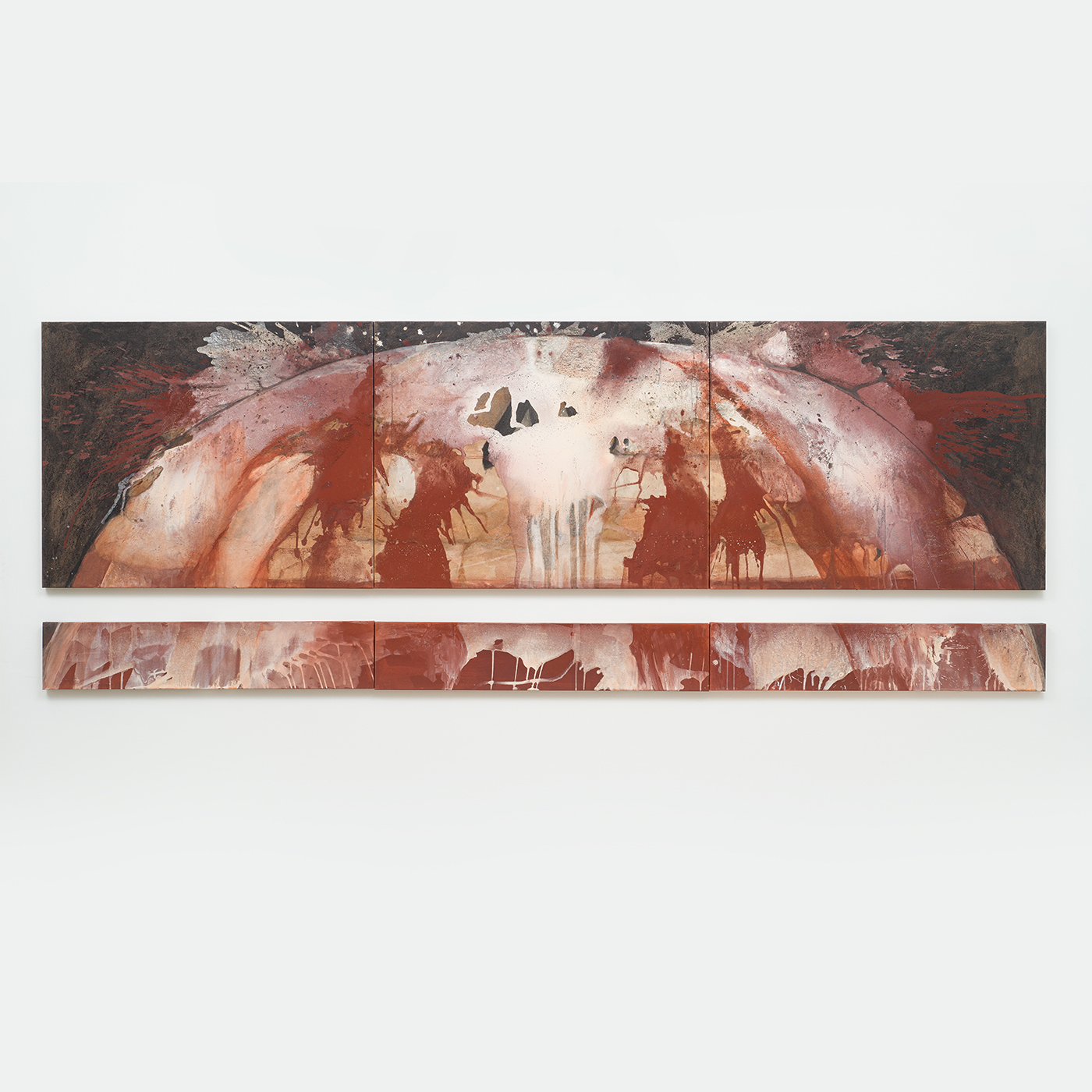
Marlene Almeida
História da terra, 2024
base, pigmentos minerais naturais, e resinas sobre lona (políptico composto por 6 telas)
110 x 300 cm
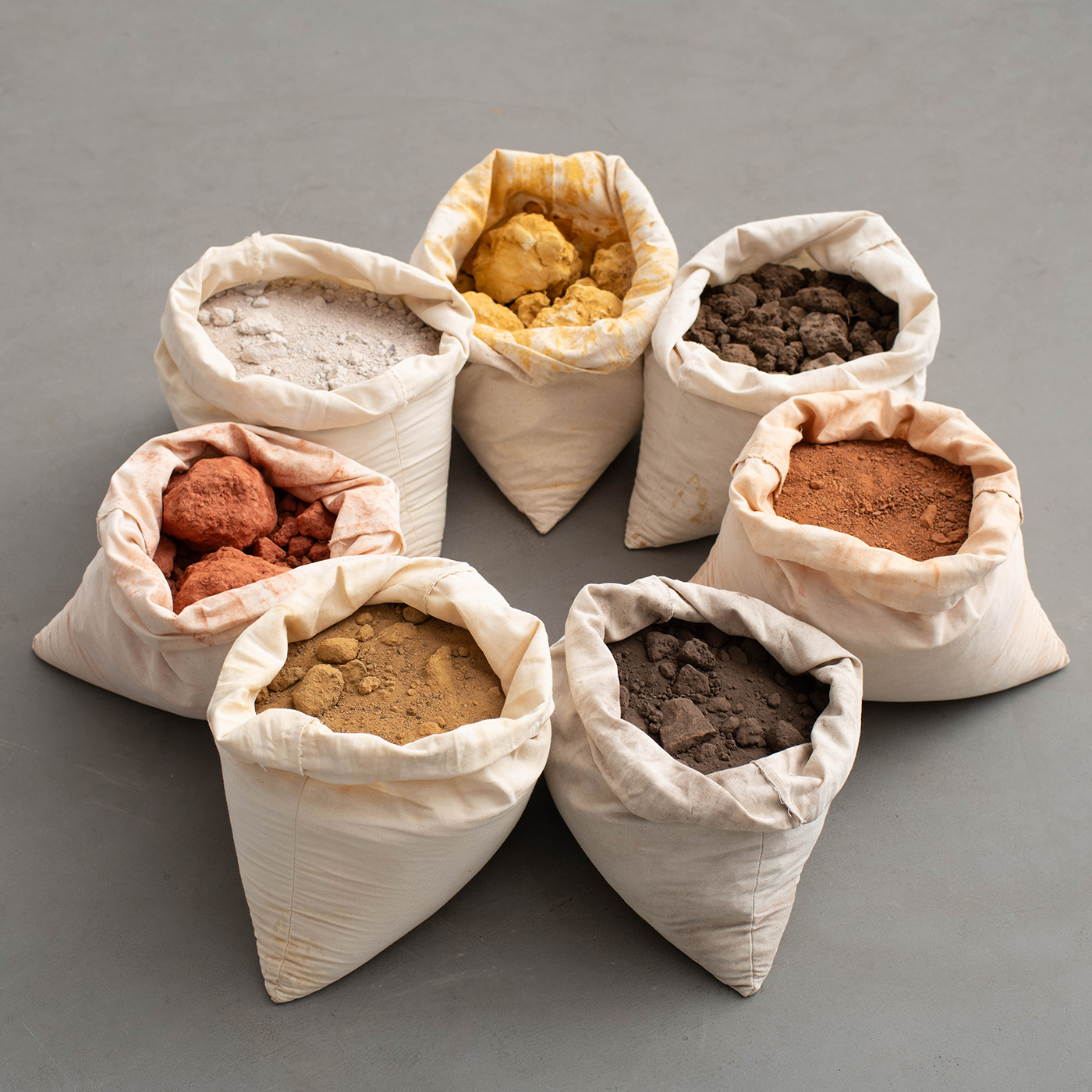
Marlene Almeida
Terra livre, 2019
7 sacos de tecido de algodão cru, contendo terras de regiões variadas do Brasil (sertão, cariri, brejo e litoral paraibano)
dimensões variadas
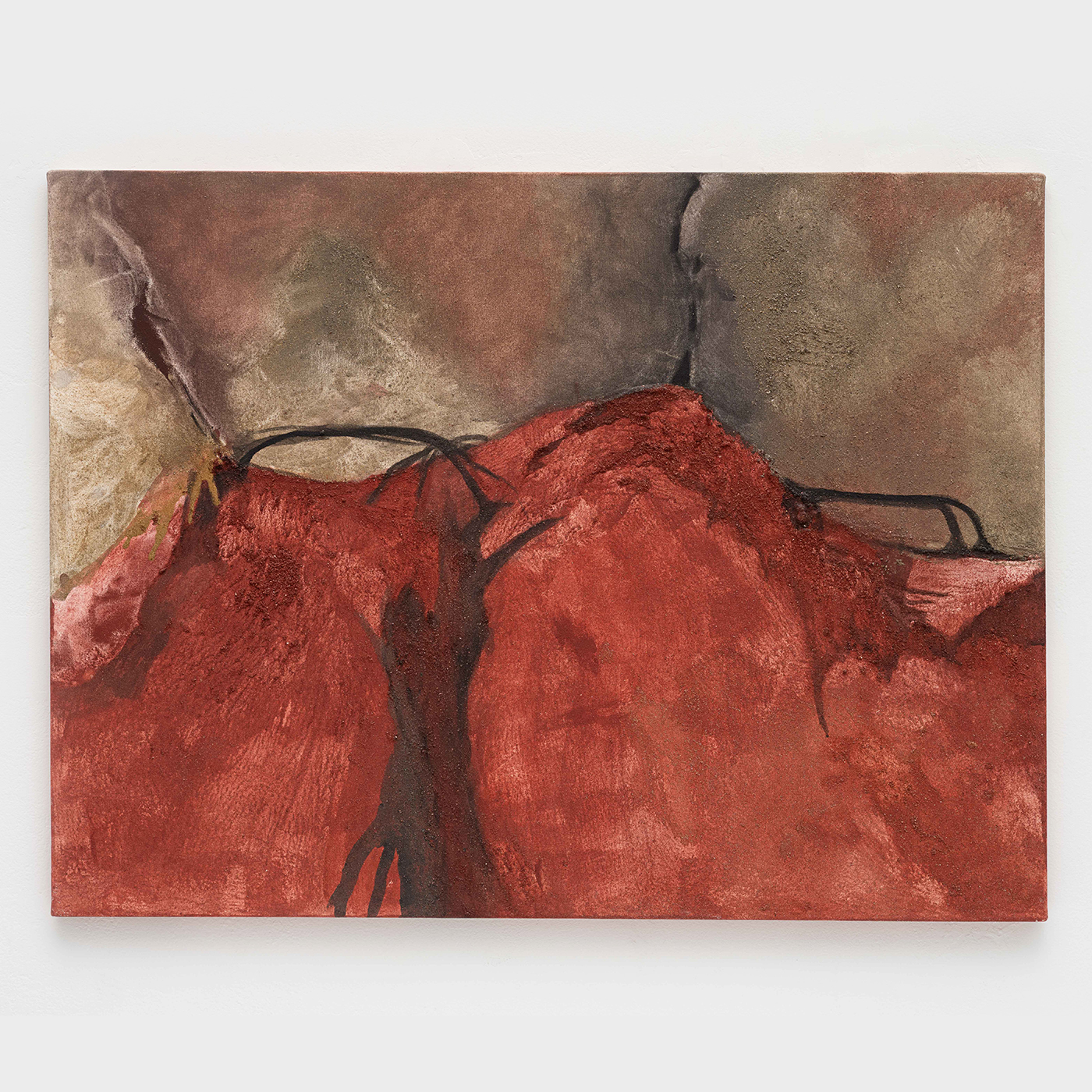
Marlene Almeida
Tauá, 2023
têmpera e pigmentos naturais sobre tela
90 x 120 cm
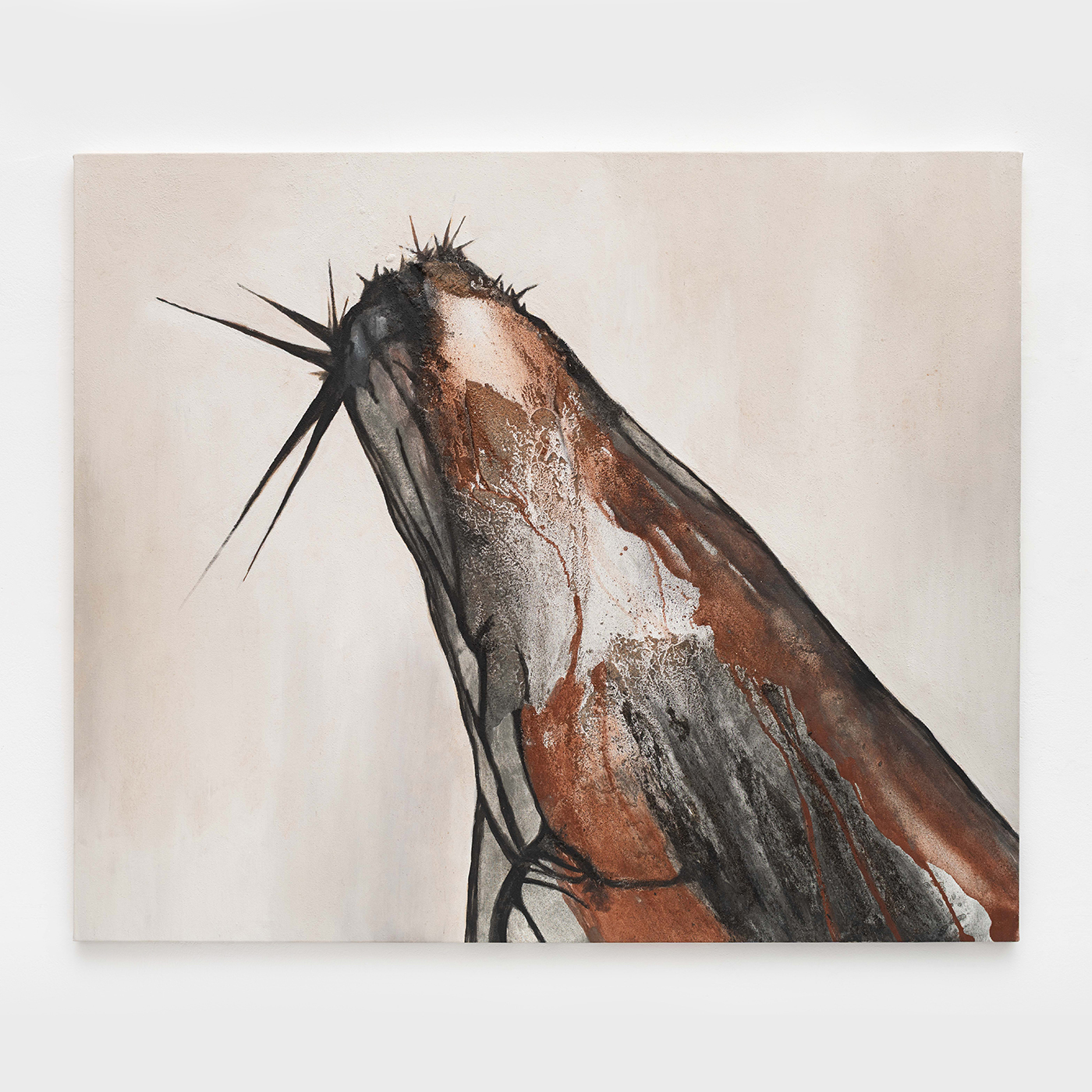
Marlene Almeida
Aguda como Serra III, 2024
pigmentos minerais naturais e aglutinantes sobre tela
145 x 174 cm
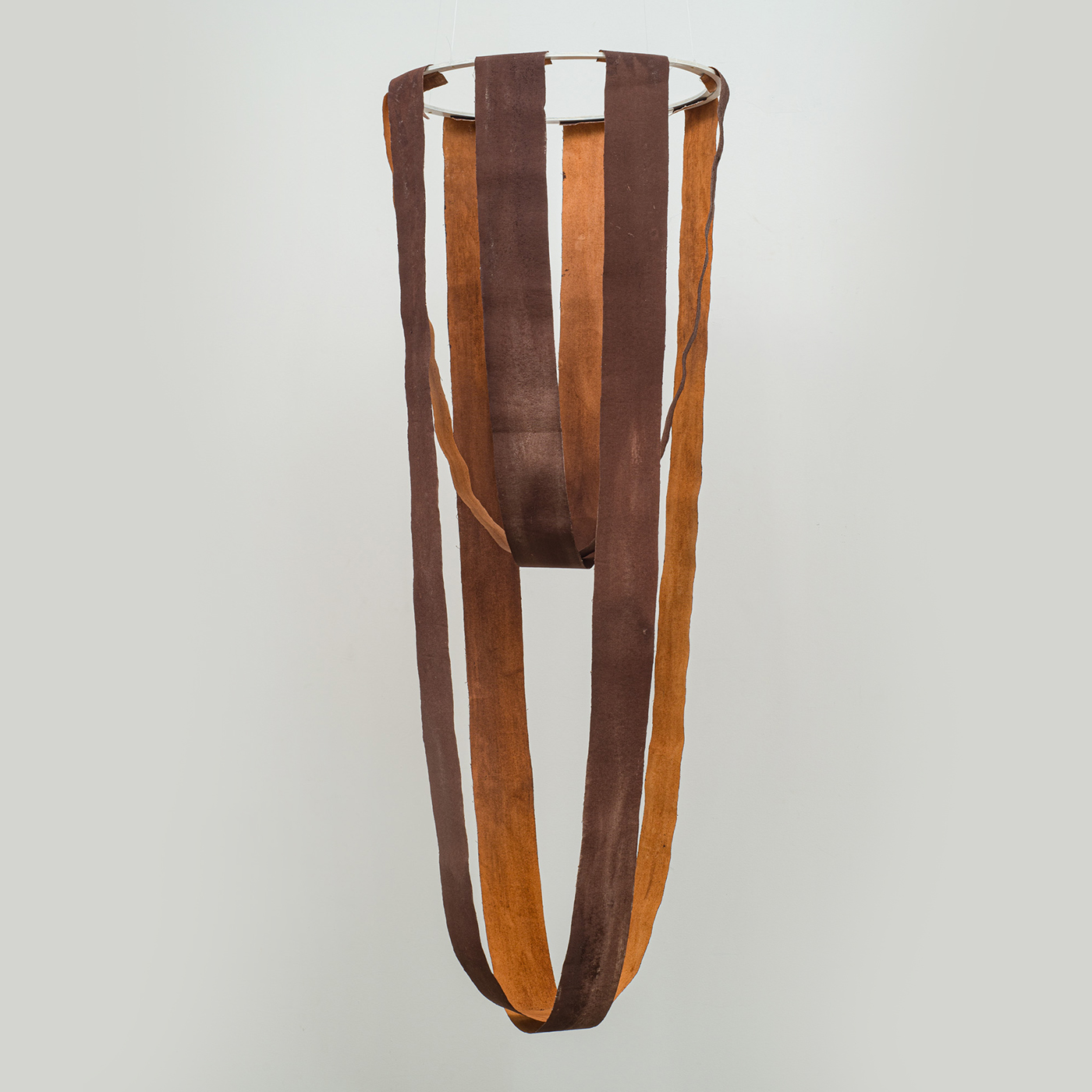
Marlene Almeida
Marrom como sombra III, 2024
faixas de lona crua pintadas com pigmentos minerais naturais, aglutinantes
145 x 50 cm
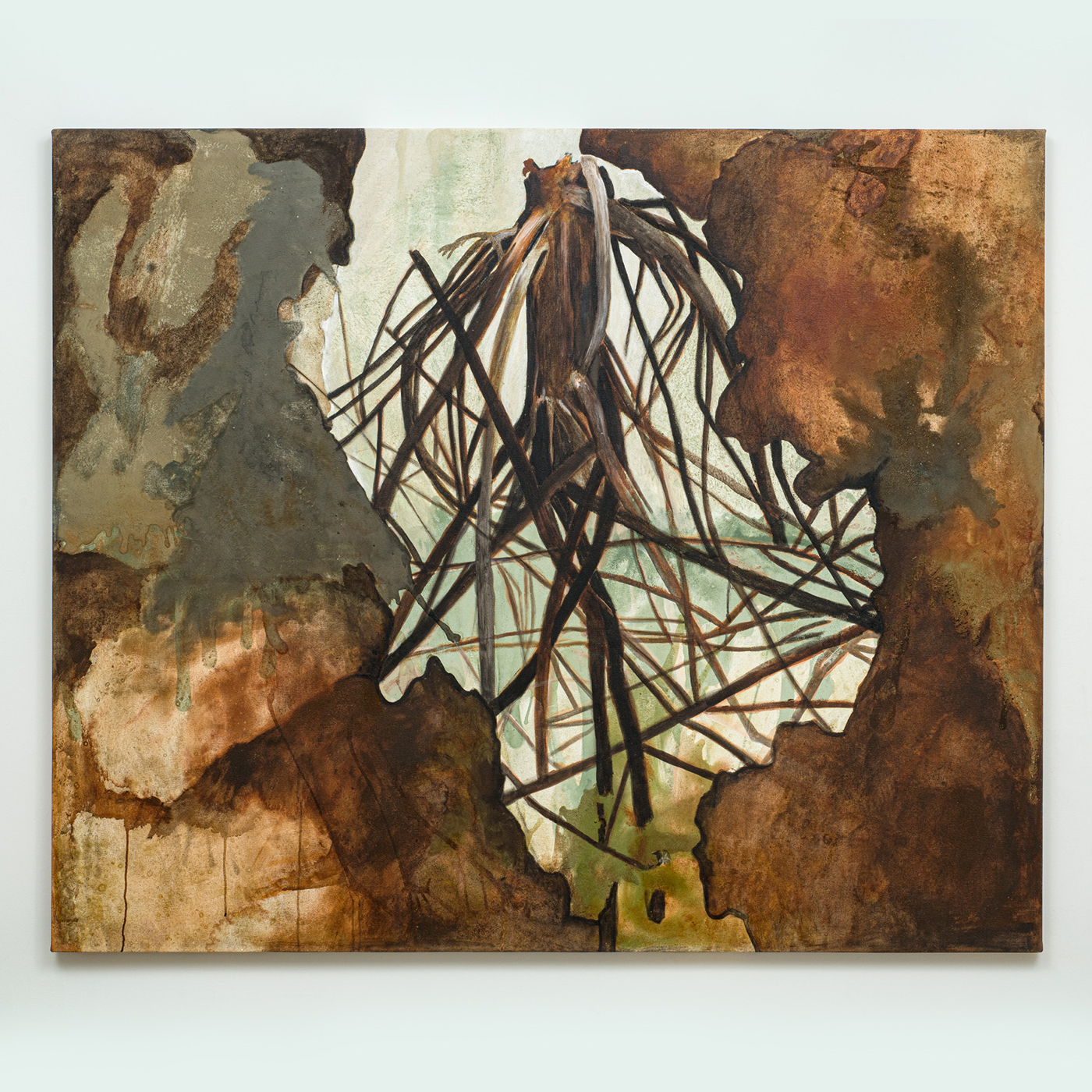
Marlene Almeida
Terra da saudade, 2024
pigmentos minerais naturais e aglutinantes sobre tela
145 x 174 cm